International Fleet
The International Fleet, commonly called the I.F., is the unified military force of humanity in Orson Scott Card's Ender's Game. It is the organization that identifies, recruits, and trains the most brilliant children to become commanders in the war against the Buggers, an alien species that nearly wiped out humanity in two previous invasions. The I.F. is the engine of the novel's plot, the unseen hand that shapes Ender Wiggin's life from his earliest childhood, and the institution whose desperate need for a perfect commander leads it to deceive, isolate, and ultimately sacrifice its own child soldiers. The I.F. is not merely a military body; it is a political and moral force that raises the question of whether the ends—the survival of the human race—justify the means of turning children into weapons.
Structure and Purpose
The I.F. is a global military alliance, formed in response to the Bugger threat, with authority that supersedes national governments. It operates the Battle School, a space station in the Belt where children are trained in zero-gravity warfare, and the Command School on the asteroid Eros, where the most promising commanders are prepared to lead the fleet. The I.F. is governed by a hierarchy that includes the Hegemon, the political leader of the alliance; the Strategos, the overall military commander; and the Polemarch, the commander of the fleet. The organization is vast, with a presence on Earth and throughout the solar system, and it maintains a monopoly on the most advanced technology, including the ansible, a device that allows instantaneous communication across interstellar distances. The I.F.'s stated purpose is to defend humanity against the Buggers, but its methods are often ruthless and its motivations are not always purely defensive. As Colonel Graff tells Ender, "Human beings are free except when humanity needs them. Maybe humanity needs you. To do something." The I.F. sees individuals as tools to be used for the survival of the species, and it is willing to sacrifice the happiness and innocence of its recruits to achieve that goal.
Recruitment and Training
The I.F. recruits children through a process that begins with the Monitor, a device implanted in the back of a child's neck that allows the organization to see and hear everything the child experiences. Ender Wiggin is monitored from a young age, and when he demonstrates exceptional intelligence and empathy, the I.F. decides to take him. The recruitment is not a simple invitation; it is a carefully orchestrated manipulation. Graff, the director of primary training at Battle School, visits Ender's home and, through a combination of lies and truths, persuades the six-year-old to leave his family and enter the school. The I.F. has already secured the parents' consent at the time of Ender's conception, as he is a Third, a child born under the population limitation laws, and his existence is contingent on the government's approval. Once at Battle School, Ender is subjected to a rigorous training regimen that includes academic studies, military history, and, most importantly, the Battle Room, a zero-gravity arena where armies of children fight mock battles with flash suits and laser guns. The I.F. deliberately isolates Ender, making him an outcast among his peers, to force him to rely on his own abilities and to develop the ruthless determination needed to win. The training is designed to produce not just competent soldiers but genius commanders, and the I.F. is willing to push its students to the brink of physical and mental collapse.
The Third Invasion and Its Aftermath
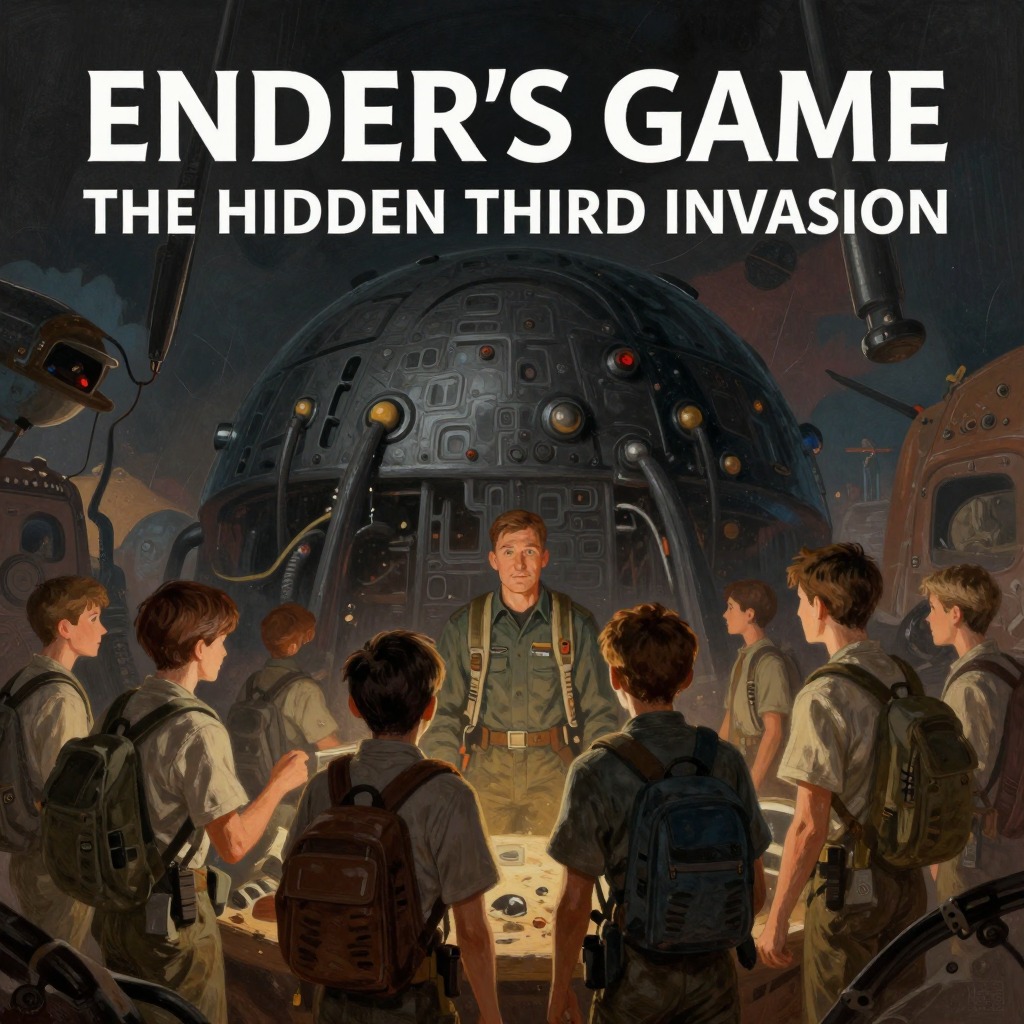
After years of training, Ender is promoted to command Dragon Army, a new army composed of inexperienced soldiers, and he is subjected to a grueling schedule of battles, often against unfair odds. The I.F. manipulates the game, changing the rules and stacking the conditions against him, to test his limits and to prepare him for the real war. When Ender finally graduates to Command School, he is placed under the tutelage of Mazer Rackham, the legendary commander who defeated the Buggers in the Second Invasion. Unbeknownst to Ender, the simulator battles he fights are not simulations at all; they are real battles, with real ships and real pilots, and he is commanding the actual fleet of the Third Invasion. The I.F. has kept this secret to ensure that Ender, with his empathy and compassion, would be able to fight without the moral burden of knowing he was killing. In the final battle, Ender destroys the Bugger homeworld, annihilating the entire species. The I.F. celebrates his victory, but Ender is devastated when he learns the truth. The organization's deception, while successful in winning the war, leaves Ender psychologically scarred, and he becomes a symbol of the moral cost of the I.F.'s methods. After the war, the I.F. is reorganized, and Ender is given the rank of admiral, but he is never allowed to return to Earth, as he is too dangerous a figure for the world's political powers. The I.F. ultimately fades into the background as the novel's focus shifts to Ender's personal journey, but its legacy remains: a war won at the cost of a child's innocence and the extinction of an entire species.
Significance and Critique
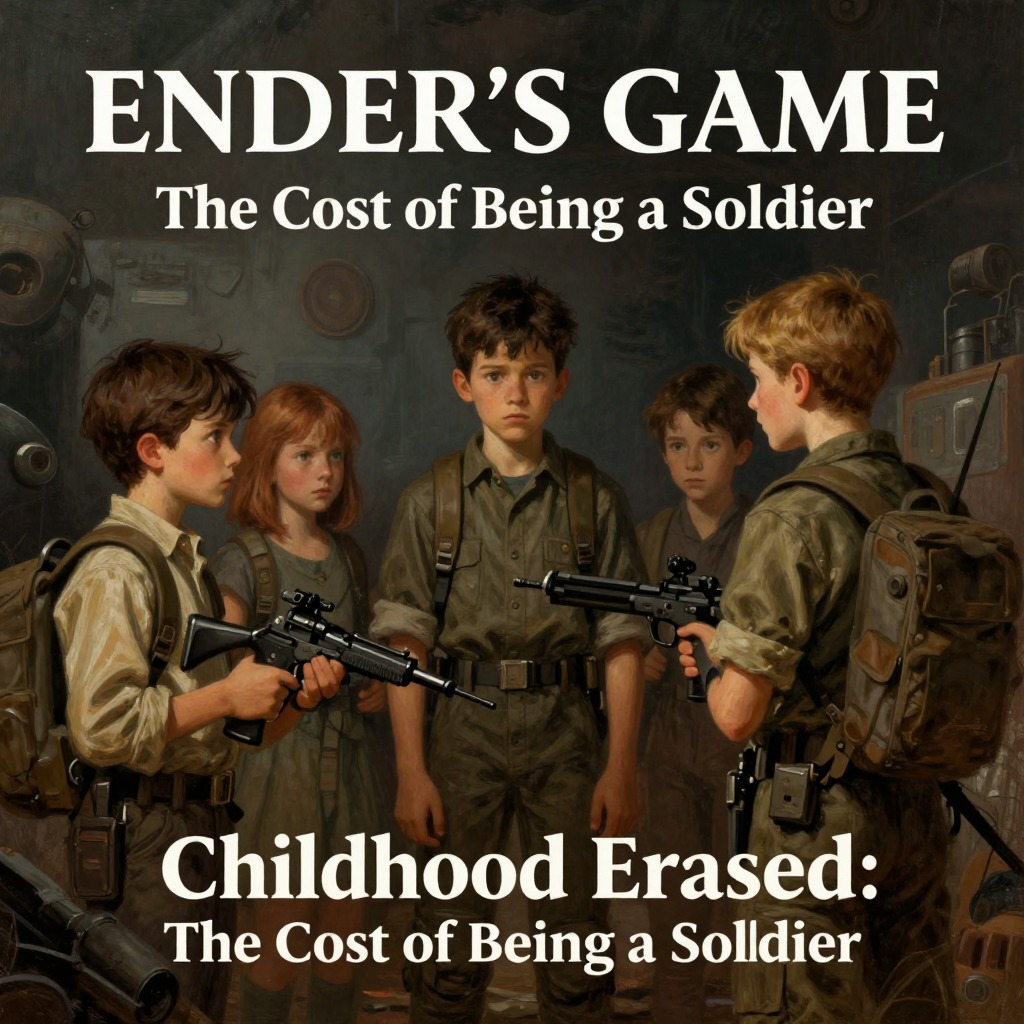
The International Fleet is more than a military organization; it is a representation of the novel's central themes. It embodies the conflict between the individual and the collective, the ethics of war, and the nature of childhood. The I.F. treats children as tools, stripping them of their innocence and forcing them to become killers. The novel critiques this instrumentalization of human life, even as it acknowledges the necessity of the I.F.'s mission. The I.F. is also a symbol of the political and military structures that shape human history, and its actions raise questions about the morality of preemptive war, the use of deception, and the responsibility of leaders. Through the I.F., Card explores the idea that the greatest threat to humanity may not be the Buggers, but the very institutions created to protect it. The I.F. is a necessary evil, but its methods are ultimately dehumanizing, and the novel suggests that the true victory lies not in defeating the enemy, but in understanding and forgiving them, as Ender does when he becomes the Speaker for the Dead.